Dreaming about a Lake Lanier home that pays you back when you are not using it? That idea can be appealing, especially when you picture summer weekends, dock days, and guests looking for a waterfront escape near Gainesville. But before you treat a lake home like an income property, you need to understand that the rules, costs, and day-to-day demands can be very different from a typical rental. Let’s dive in.
Why jurisdiction comes first
If you are considering a rental property on Lake Lanier, your first question should be simple: Is the home inside Gainesville city limits or in unincorporated Hall County? That one detail can shape how the property is defined and regulated as a short-term rental.
Hall County defines a short-term rental as a vacation home rented for overnight lodging for not less than two nights and not more than 30 consecutive nights. Gainesville’s Unified Land Development Code defines a short-term rental as overnight lodging for not more than 15 days and lists it as a permitted use in the city’s residential districts. For city properties, buyers should also verify business tax and licensing requirements with Gainesville’s Business Tax & Licensing division.
This is why lakefront due diligence starts with the parcel, not the porch view. Two homes on Lake Lanier can look similar but fall under different local rules depending on where the boundary lines land.
Hall County rental rules to know
If the property is in unincorporated Hall County, the short-term rental process is detailed and operational. You are not just buying a second home. You are stepping into a regulated business model.
Hall County requires a separate business license for each vacation home used as a short-term rental. The application must include the local contact person, bedroom count, approximate square footage, occupancy figures, and copies of any covenants that apply to the property.
The county may deny an application if recorded covenants restrict short-term rentals, if a prior Hall County short-term-rental license was revoked within the last 24 months, or if covenant language conflicts with the use. The license lasts no more than one year and must be posted inside the home.
Local contact requirements
Hall County requires each rental to have a local contact person who is at least 21 years old. That person must be available 24 hours a day, 7 days a week and respond within one hour after a complaint or violation notice.
Each rental party must also designate a responsible person who is at least 25 and legally responsible for guest compliance. If you are buying from out of town or planning a mostly hands-off setup, this is a major factor in your planning.
Occupancy and safety rules
Occupancy in Hall County is limited to two guests per bedroom plus three guests per property. If a home has more than six bedrooms, occupancy is capped at 15 unless added life-safety standards are met, such as a sprinkler system, fire alarm, and annual fire inspection.
The bedroom count must match the tax property card for whole-house short-term rental use. Bedrooms are inspected before a certificate of occupancy is issued, and homes served by septic systems must meet applicable environmental health rules. The property must also display a visible street number at all times.
Parking, noise, and event limits
Hall County places clear limits on guest behavior and property use. Owners and local contacts must make reasonable efforts to prevent noise violations, disorderly conduct, and domestic-animal issues.
Parking is limited to designated hard-surfaced areas. Guests cannot park in yards, on the county right-of-way, or in neighbors’ spaces. The rental also cannot be advertised or used as an event venue for weddings, parties, corporate events, or similar gatherings.
Another important rule is that the county allows only one reservation at a time per licensed short-term rental. That matters if you were picturing multi-group bookings or event-style hosting.
Enforcement can affect your bottom line
When you buy a Lake Lanier property for rental income, enforcement risk matters just as much as nightly rates. Hall County requires advertising to disclose maximum occupancy and noise rules, and neighbors within 500 feet are notified when a new short-term-rental license is issued or when the contact person changes.
Penalties can escalate quickly. The county may issue a written notice and a fine up to $500 for a first violation, up to $1,000 for a second, and up to $2,000 plus a 24-month revocation for a third violation within 12 months. Operating without the required license can lead to a $500-per-day penalty.
That makes guest screening, clear house rules, and responsive local oversight more than nice extras. They are part of protecting the asset.
Taxes and reporting are part of ownership
A Lake Lanier rental is not just about the mortgage, insurance, and cleaning schedule. It also comes with tax reporting responsibilities at the state and local level.
Georgia’s state hotel-motel fee is $5 per night and applies to accommodations furnished to the public for value, including short-term rentals managed through online marketplaces. The first 30 days of a rental are subject to the fee, and it stops after the 31st day of continuous occupancy if the stay becomes an extended-stay rental.
The Georgia Department of Revenue requires electronic reporting and remittance by the 20th day of the following month. Owners must register through the Georgia Tax Center for the required tax numbers.
Hall County also added a separate monthly Hotel/Motel Tax Report requirement for businesses holding a short-term-rental business license, effective August 1, 2025. Even when a booking platform collects taxes and fees on the owner’s behalf, the county still requires the monthly report so it can reconcile and audit the amounts.
For bookings made outside online platforms, the owner must collect and remit applicable taxes and fees directly. Reports are due by the 20th of each month, and timely filers can deduct a 3 percent collector’s compensation fee.
Lake Lanier adds another layer
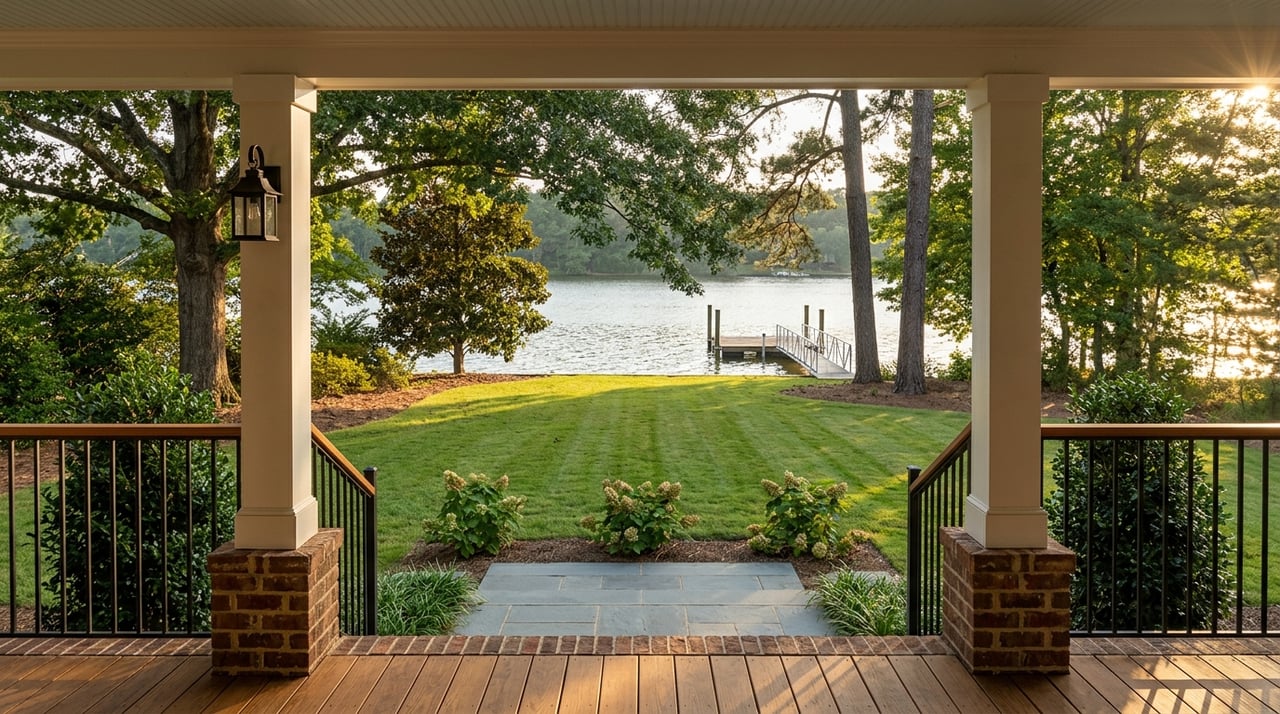
A rental property on Lake Lanier comes with one more important reality: the shoreline is regulated. That can affect dock access, shoreline improvements, and your guest experience.
The U.S. Army Corps of Engineers says Lake Lanier’s shoreline is open to the general public. Shoreline permits and licenses are nontransferable, last up to five years, and do not grant private real estate rights or exclusive use on government property.
If the home has a dock or shoreline improvements, you should not assume those rights transfer automatically with the sale. New owners of existing facilities may apply for their own permit, and modifications to facilities need prior approval.
Dock and shoreline questions to ask
Before you move forward on a property, verify:
- whether there is an active dock or shoreline permit
- whether a permit must be reissued after closing
- whether any modifications were previously approved
- whether there are wait-list issues for new facilities
- whether riprap, stabilization, or similar features need review
On Lake Lanier, a dock is not just an amenity. It is a regulated feature that can influence both value and rental usability.
Seasonality matters on the lake
Lake Lanier is a major recreation destination, and that shapes how a waterfront rental may perform. The Corps describes the lake as one of its most popular lakes, with several million visitors annually and activities that include boating, swimming, fishing, camping, and picnicking.
The lake has about 39,000 acres of water, 76 boat ramps, and 10 marinas. Most ramps are open year-round, though some may close when water levels are low, and boaters are advised to watch for submerged stumps, logs, rocks, and shallow water.
While the official sources do not provide an occupancy forecast, the recreation pattern points to stronger interest during warm-weather weekends, holidays, and boating season than in colder months. If you are underwriting income, that seasonal rhythm should be part of your expectations.
What to underwrite before you buy
If you are serious about buying a Lake Lanier rental near Gainesville, think beyond the purchase price. This type of property often works best for buyers who are comfortable with active oversight and ongoing compliance.
A practical buyer checklist includes:
- confirm whether the parcel is inside Gainesville or in unincorporated Hall County
- review recorded covenants and HOA rules before assuming short-term rentals are allowed
- verify dock permit status and whether ownership changes affect use after closing
- inspect septic capacity, parking layout, and visible address signage
- model license fees, inspection costs, tax reporting, and local contact needs
Hall County’s review process usually takes 1 to 3 business days, and the inspection fee is $75. If occupancy is 16 or more, the Fire Marshal is involved.
Is a Lake Lanier rental worth it?
For the right buyer, yes, it can be. A Lake Lanier property can offer a mix of personal enjoyment and rental income, especially if you value waterfront living and understand the work that comes with it.
But the best approach is a realistic one. This is not a casual plug-and-play vacation home strategy. It is a regulated hospitality asset with local rules, reporting deadlines, neighbor sensitivity, and waterfront permit considerations.
That is exactly why local guidance matters. When you know how to evaluate jurisdiction, covenants, dock permits, and operating demands before you close, you can make a more confident decision and avoid expensive surprises later.
If you are weighing a Lake Lanier home for personal use, rental income, or a blend of both, working with someone who understands Gainesville-area lake property details can make the search much smoother. Jennifer Anderson brings local Lake Lanier insight and hands-on guidance to help you evaluate the property, the rules, and the lifestyle fit with confidence.
FAQs
What should I check first for a Lake Lanier rental property near Gainesville?
- First, confirm whether the property is inside Gainesville city limits or in unincorporated Hall County, because the short-term rental rules and processes differ.
Can Hall County deny a short-term rental license for a Lake Lanier home?
- Yes. Hall County can deny a license if restrictive covenants prohibit short-term rentals, if covenant language conflicts with the use, or if a prior county short-term-rental license was revoked within the last 24 months.
Can I use a Lake Lanier rental property for parties or weddings in Hall County?
- No. Hall County rules state that a short-term rental cannot be advertised or used as an event venue for weddings, parties, corporate events, or similar functions.
Does a dock permit transfer automatically when I buy a Lake Lanier home?
- No. The U.S. Army Corps of Engineers says shoreline permits and licenses are nontransferable, so a new owner must apply for their own permit or reissue as required.
What taxes apply to a short-term rental in Hall County, Georgia?
- Georgia applies a $5 per night state hotel-motel fee to qualifying short-term stays, and Hall County requires monthly Hotel/Motel Tax reporting for businesses holding a short-term-rental business license.
Does a Hall County short-term rental need a local contact person?
- Yes. Hall County requires a local contact person who is at least 21 years old, available 24/7, and able to respond within one hour after a complaint or violation notice.