If you have ever clicked on a Lake Lanier listing and thought, What does this actually mean?, you are not alone. Waterfront listings around Gainesville can sound simple on the surface, but the real story usually comes down to shoreline rules, dock status, and water depth. When you understand those three pieces, you can read listings with a lot more confidence and avoid surprises later. Let’s dive in.
Why Lake Lanier Listings Need Decoding
On Lake Lanier, the word waterfront does not tell you everything you need to know. A home may sit near the lake, but that alone does not confirm whether a private dock is allowed, whether the shoreline can be improved, or how usable the property feels when lake levels change.
That is because Lake Lanier is a U.S. Army Corps of Engineers-managed reservoir. The shoreline is governed by Corps rules, and lake levels fluctuate because the reservoir serves multiple purposes. In day-to-day terms, that means the same property can look and function very differently depending on the season and the water level.
Start With Shoreline Classification
The first thing to understand is shoreline classification. This matters more than marketing language because it helps determine what private shoreline use may be allowed.
According to the Lake Lanier shoreline rules, limited development is the only shoreline category where private shoreline-use permits may be issued. If a property is in a protected shoreline or public recreation area, private shoreline facilities are not allowed. Prohibited access areas are reserved around key project infrastructure.
What the Main Categories Mean
- Limited development: Private shoreline-use permits may be allowed.
- Protected shoreline: Private shoreline facilities are not allowed.
- Public recreation: Private shoreline facilities are not allowed.
- Prohibited access: Reserved for project infrastructure and restricted use.
This is why two homes that both look “lakefront” in photos may offer very different ownership experiences. One may support a permitted private dock, while the other may not allow that kind of private use at all.
Understand What Lakefront Really Means
A lot of buyers assume that if a property touches the lake, it comes with private shoreline rights. On Lake Lanier, that is not how it works.
The shoreline includes public land, and private property lines do not extend onto that government-owned shoreline. The shoreline is open to general public use, and a permit does not create exclusive real estate rights. So when a listing says lakefront, you should read that as a location description, not a guarantee of private control over the shoreline.
Decode Dock Language Carefully
Dock wording is often where buyers get the most confused. A few familiar listing phrases can sound straightforward, but each one points to a different setup and a different daily experience.
Private Dock
A private dock, sometimes called a private floating facility, is for private rather than commercial use. On Lake Lanier, these facilities are regulated through the permit system, and new construction generally follows size and design limits.
The Shoreline Management Plan describes a typical private boat dock as having a maximum footprint of 32 by 32 feet. New docks are generally open-sided, though a roof may be allowed under the rules.
Single-Slip vs. Double-Slip
These terms are local market shorthand, not separate legal categories. In practical terms, they usually tell you how much boat storage the dock may support.
A double-slip dock is commonly associated with a 32 by 32 foot dock. A single-slip dock usually supports a different storage setup and may affect how you use the property for boating, entertaining, or multiple watercraft.
Community Dock
A community dock is shared rather than individually owned in the same way buyers often imagine a private dock. These docks are recognized as a way to reduce shoreline impact, and they are often used in development settings.
If a listing mentions a community dock, make sure you understand exactly what is being shared and how access works. The photo may look inviting, but your everyday use depends on the legal access arrangement.
Courtesy Dock
A courtesy dock is not the same as a private dock or a full community boat storage setup. Courtesy docks are intended for access only.
They are not for overnight storage or mooring. So if you plan to keep a boat at the property, this distinction matters a lot.
Grandfathered Features
When a listing mentions a grandfathered dock, boathouse, or older feature, that should raise a practical question: can it continue safely and compliantly over time? A grandfathered structure was allowed under older rules, but new permits are no longer issued for that type.
If the structure stops meeting safety or compliance standards, it must be removed and usually cannot be rebuilt in the same form. That makes grandfathered features valuable to understand before you fall in love with the look of a legacy structure.
Read Deep Water as a Usability Term
Deep water is one of the most common phrases in Lake Lanier listings. It sounds precise, but in reality it is best understood as a usability claim, not a promise that the water will always work the same way.
The shoreline rules say intended mooring sites should allow six feet of water under the dock at the slip end, and proposed docks are evaluated with that benchmark at full pool. Because lake levels fluctuate, deep water today does not automatically mean the same usability during lower water periods.
Why Full Pool and Low Pool Matter
Lake Lanier is not static. Water levels rise and fall, and that affects how easily you can access your dock, launch a boat, or use the shoreline the way you expect.
That is why it is smart to ask not only, “Is this deep water?” but also, “How does this property perform at the lowest water level I expect to use?” Listing photos often show the property at its best. Your goal is to understand how it functions in real life.
Pay Attention to Shoreline Access
Sometimes the biggest issue is not the dock. It is the walk to the dock.
A steep shoreline can mean a longer or more strenuous trip between the house and the water. On Lake Lanier, steps and meandering paths may be allowed where needed, but they are regulated. So if a listing mentions a steep lot, a path, or many steps, think about your day-to-day comfort, not just the scenic view.
What Riprap Means
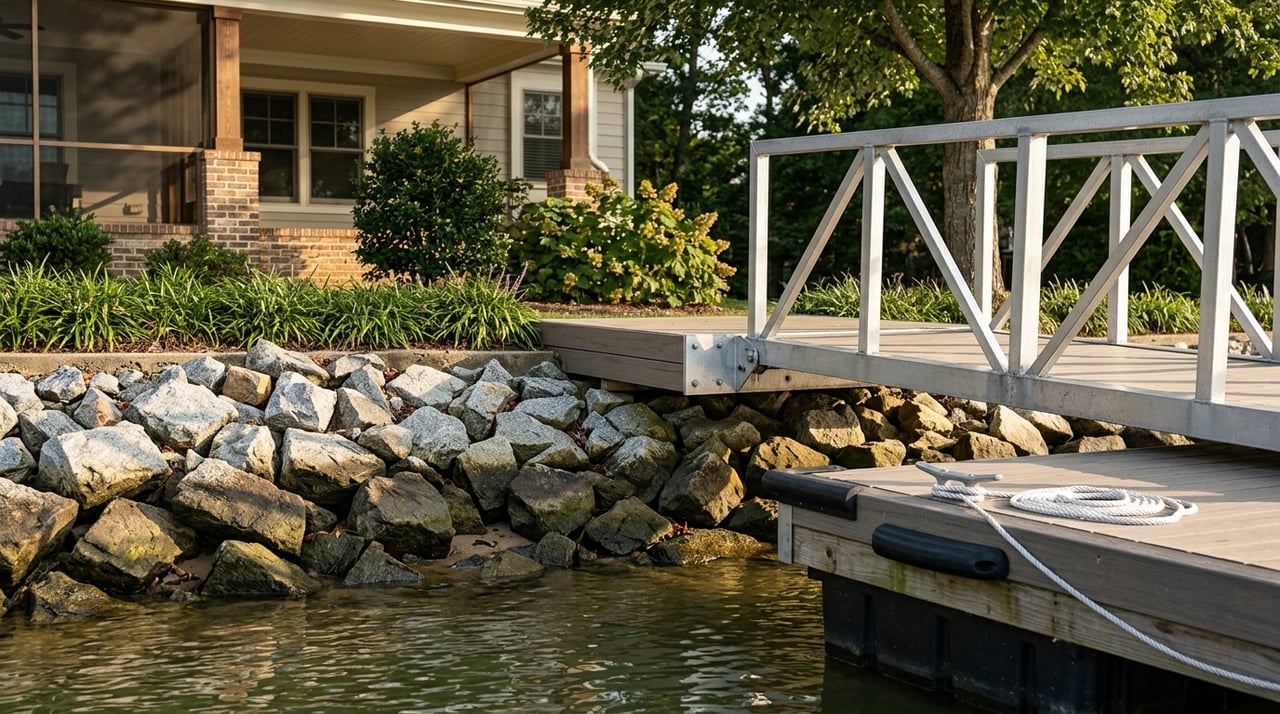
If you see riprap in a listing, it usually means the shoreline has been stabilized with stone to help protect the bank from erosion. On Lake Lanier, shoreline protection is an authorized activity under the permit framework.
For buyers, this usually signals that the bank has been improved for stability rather than left completely natural. It is a functional detail that can matter as much as a cosmetic one.
Five Things to Verify Before You Trust the Listing
A good Lake Lanier listing can be helpful, but it should never be your only source of truth. Before you move forward, verify the details that shape how the property actually works.
1. Ask for the Shoreline Use Permit
If there is an existing permitted facility, ask the seller for a copy of the Shoreline Use Permit. Buyers are advised to get it directly from the seller because the permit is not released to buyers through the Corps due to privacy restrictions.
This document helps you confirm what is permitted and what is not. It is one of the most important items in a waterfront purchase review.
2. Check for Violations or Encroachments
Unauthorized vegetation cutting, path work, or other unapproved changes on government property can create compliance issues. That can affect the permit status and your experience as a future owner.
Even if a shoreline area looks neat or expanded, that does not mean the work was authorized. Verification matters.
3. Confirm the Dock Type and Status
Find out whether the dock is current, replacement, or grandfathered. This tells you more than the age of the structure. It tells you what may happen later if repairs, replacement, or renewal become necessary.
A grandfathered feature may continue only while it remains safe and compliant. That is an important difference from a currently permitted standard dock.
4. Verify the Access Model
Lake access can mean several different things. It may refer to a private dock, community dock, courtesy dock, or another shared arrangement.
Those setups create very different experiences. Make sure the access model matches how you actually want to use the property.
5. Confirm Depth at the Dock
Do not stop at general statements about water depth. Confirm depth at the dock end and ask how the property performs at the lower lake levels that matter to you.
This is often more useful than knowing the maximum depth in ideal conditions. Daily usability is what really counts.
A Simple Way to Read Any Waterfront Listing
If you want a practical shortcut, use this three-part test when reading any Lake Lanier listing in Gainesville or Hall County.
- Shoreline classification tells you what may be allowed.
- Permit status tells you who can use it and under what terms.
- Water level and depth tell you how well it works in real life.
When those three pieces are clear, the rest of the listing language gets much easier to understand. You can move past the marketing phrases and focus on what truly fits your lifestyle and goals.
If you are comparing Lake Lanier properties and want help sorting out dock language, shoreline rules, or what a listing really means for your day-to-day life on the water, Jennifer Anderson can help you navigate the details with local insight and a clear, hands-on approach.
FAQs
What does waterfront mean in a Lake Lanier listing?
- On Lake Lanier,
waterfrontdescribes the property’s location near the lake, but it does not guarantee a private dock, exclusive shoreline rights, or permission for private shoreline facilities.
What does limited development mean for a Lake Lanier property?
Limited developmentis the shoreline classification where private shoreline-use permits may be allowed, making it a key factor for buyers who want to understand private dock potential.
What does deep water mean on Lake Lanier?
Deep wateris best understood as a usability term that relates to dock function and boat access, not as a guarantee that water depth will remain the same at all lake levels.
What does a community dock mean in a Lake Lanier listing?
- A community dock means dock access is shared, and you should verify exactly how that shared arrangement works before assuming it functions like a private dock.
What does grandfathered dock mean for a Lake Lanier home?
- A grandfathered dock or feature was authorized under older rules, but if it no longer remains safe and compliant, it may have to be removed and may not be rebuilt in the same form.
What should you ask for before buying a Lake Lanier waterfront home?
- You should ask the seller for the existing Shoreline Use Permit and verify dock status, shoreline classification, possible violations, access type, and depth at the dock.