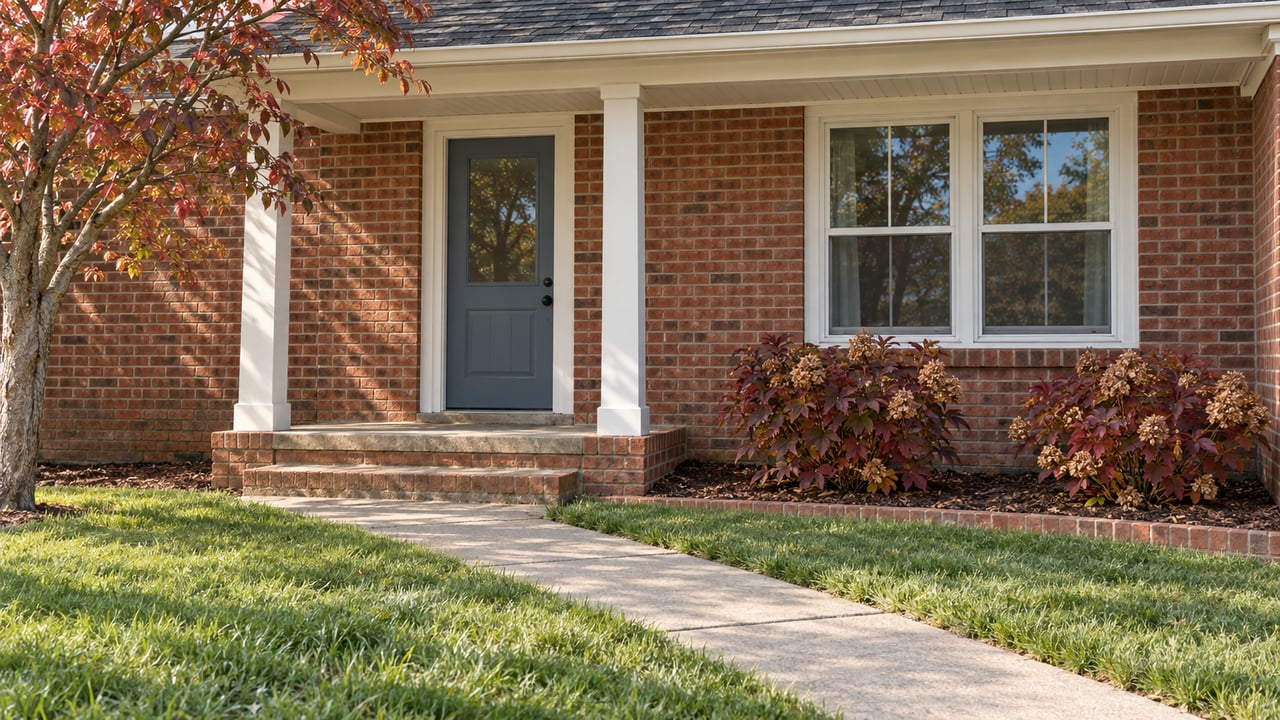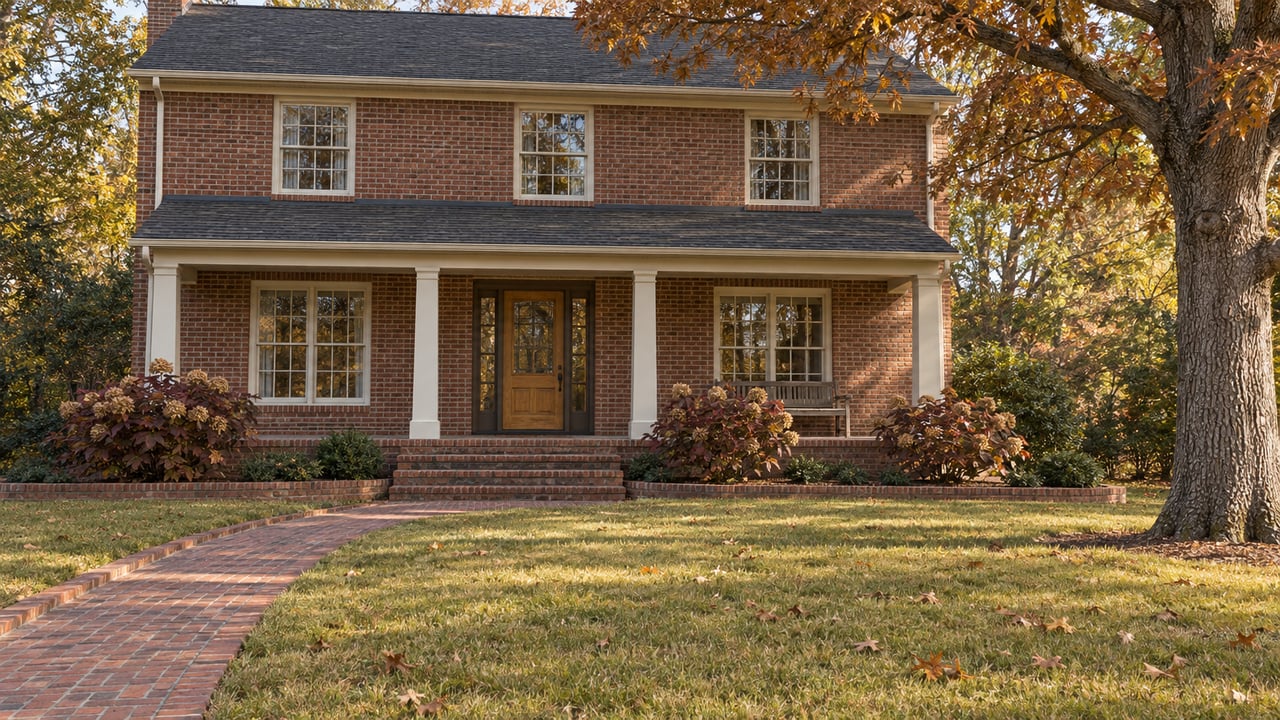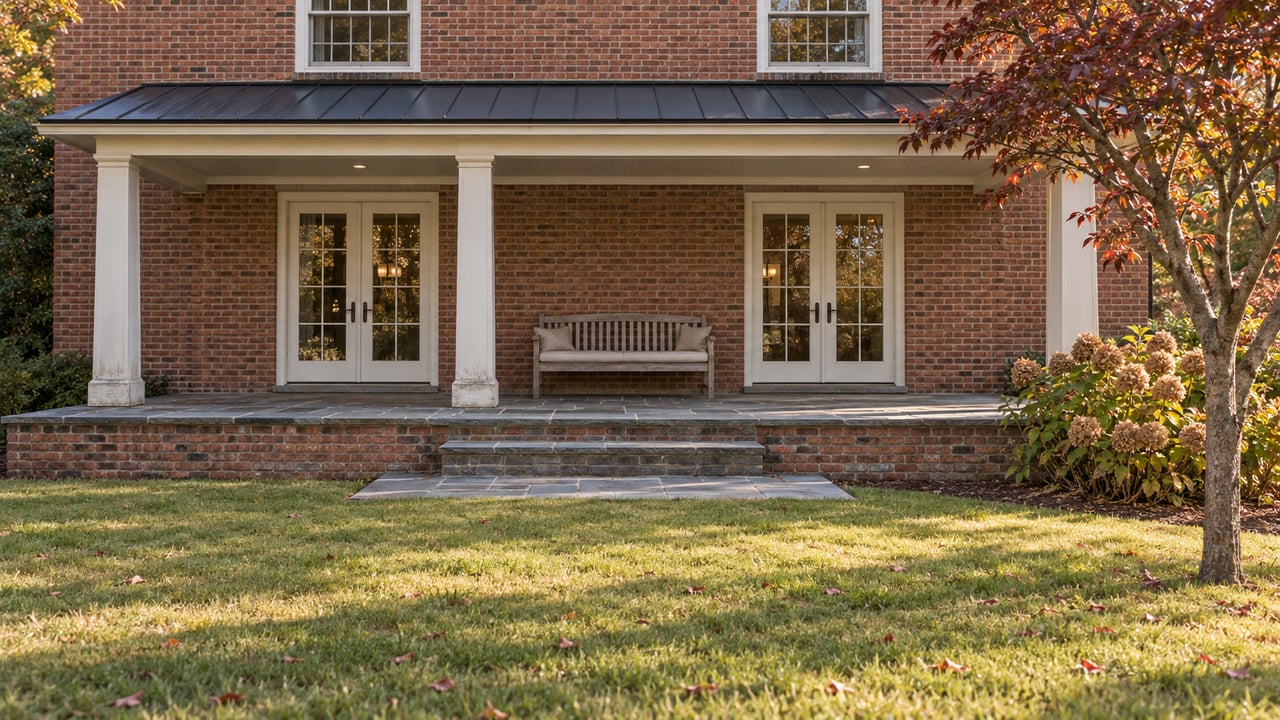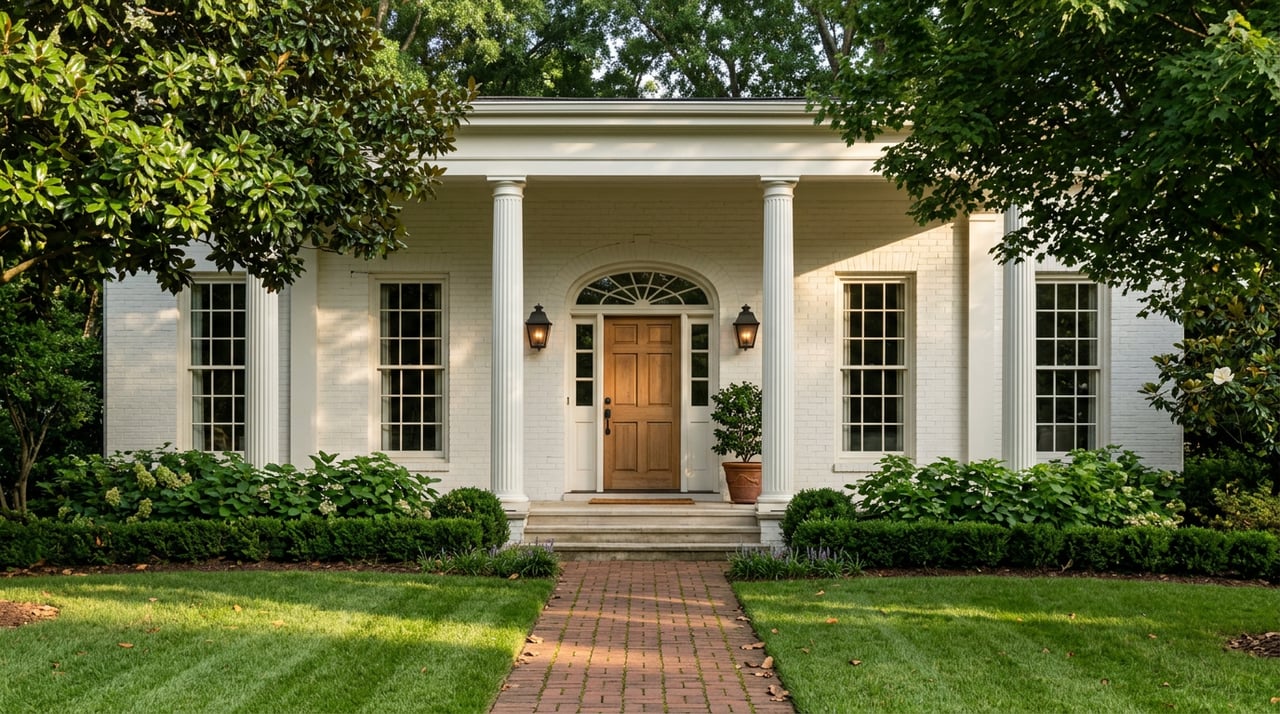
Green Street sells on a canopy. Anyone who has walked the half-mile between Academy Street and Glenwood Drive knows the feeling: a broad, level corridor of Victorian and Neo-Classical Revival homes set back behind deep lawns, shaded by a run of mature hardwoods that predate most of the buyers looking at them. That canopy, that setback, and that lawn frontage are what the price per square foot on this street is quietly paying for.
In 2026, all three of those things are sitting on a Georgia Department of Transportation appraisal desk. If you are writing an offer on Green Street this year, the number you put on the contract is no longer paying for a settled amenity. It is paying for an option on how a state right-of-way process resolves, layered on top of a local historic-district review that governs almost every exterior change the house will ever see.
The visible premium and the pending state acquisition are the same asset. A Green Street offer in 2026 has to be written to that fact.
Two Review Authorities Sit Across From Every Buyer
Most Gainesville buyers only think about one plan-review body: the county on the septic side, the city on the permit side. Green Street has two, and they run on different clocks with different incentives.
The first is the Gainesville Historic Preservation Commission. If the property sits inside the local Historic Preservation Overlay Zone, a Certificate of Appropriateness must be obtained before any material change to the exterior. Major work goes to the GHPC. Minor work goes to the Community Development Director. The framework lives in Chapter 9-8-8 and Article 9-23 of the Unified Land Development Code, and the day-to-day contact is Special Projects Manager Jessica Tullar at 770-531-6570. The design standards themselves are the Gainesville Historic Preservation Manual and Design Guidelines, adopted in December 2013.
The second is GDOT, working through Project PI 0017392, a 0.7-mile operational-improvement project on State Route 60 between Academy Street and Glenwood Drive. It is programmed in the Gainesville-Hall MPO's FY 2024-2027 Transportation Improvement Program as GH-121, and as of spring 2026 the appraisal process is beginning after a utility-negotiation delay.
The buyer's problem is that these two bodies are not coordinating on your closing timeline. They are moving on their own.
What The COA Actually Locks In
A COA is not a permit in the ordinary sense. It is a determination that a proposed exterior change is consistent with the district's design guidelines. The guidelines are, in the city's own language, standards rather than laws, but the ULDC gives them teeth by requiring the COA before an exterior building permit can issue.
Work that typically triggers a COA on Green Street includes:
- New construction, additions, and accessory structures like detached garages or pool houses
- Demolition or relocation of a contributing structure
- Roof material changes, especially anything moving away from the original profile
- Window and door replacement where the divided-light pattern, sash type, or opening dimension changes
- Fencing, driveway paving material, and site walls visible from the public right-of-way
- Signage, which matters if any part of the property has a home-office or short-term-rental component
For a buyer, the practical read is that the interior is yours and the envelope belongs to a review process. If your value model for the property depends on adding a second-story primary suite, replacing the original wood windows with a stock vinyl unit, or expanding a driveway toward the street, you are underwriting a design review, not a construction budget. That review is winnable. It is not automatic, and it is not fast.
The GDOT Project Is Not A Rumor. It Is An Appraisal Line Item.
The scope of PI 0017392, as documented by the Save Green Street group and confirmed against the GHMPO's FY 2024-2027 TIP, is a 5-foot raised median, 11-foot travel lanes, a 6-foot sidewalk, a 2-foot utility and pedestrian light strip, and two multi-lane roundabouts, one at Academy Street and E.E. Butler Parkway and a second at the Thompson Bridge Road and Riverside Drive intersection. The project length is 0.7 miles. Total estimated cost is roughly $23.3 million with $7.09 million in right-of-way funds. More than 30 parcels are expected to be affected.
The number that most directly touches a buyer's due diligence is trees. Of the mature specimens inventoried along the corridor, 21 on the east side and 16 on the west side are currently slated for removal. GDOT's position, relayed by State Representative Matt Dubnik in May 2026, is that an independent arborist found the trees approaching the end of their typical lifespan, and the department has committed to replanting. The Save Green Street petition on Change.org, which passed 3,200 signatures in March 2026 per local reporting, exists precisely because a mature canopy and a replanted canopy are not the same asset for the next thirty years.
Mayor Zack Thompson sent a letter to GDOT endorsing the second roundabout as vital for traffic flow and safety while asking the department to narrow the proposed sidewalks from six feet, place utilities underground, and reduce the overall footprint. In March 2026, per the Gainesville Times, the city formally requested modifications. Gainesville real estate executive Frank Norton Jr. wrote his own letter to GDOT citing major impacts to the historic district. The design is being contested. It is not being cancelled.
For a buyer, the useful takeaway is that appraisals are being ordered, and Atlanta eminent-domain firms are already prospecting Green Street property owners by email. If you are buying from a seller whose parcel is inside the corridor, they may have already received a GDOT letter. They may have an appraisal in hand. That document, or the absence of it, belongs in the due-diligence file.
What A Prudent 2026 Offer Actually Does Differently
Green Street is one of the few Gainesville addresses where a boilerplate offer gives up meaningful ground. The sequence that reflects the current facts looks something like this:
- Before signing, ask the listing agent in writing whether the seller has received any correspondence from GDOT regarding PI 0017392, including a notice of interest, an appraisal, or a right-of-entry request.
- Structure the due-diligence period to accommodate a written call with the GHPC office, not just the county permit desk. If your renovation plan depends on a specific exterior change, get informal read from staff before the contingency expires.
- Order a current survey rather than relying on the seller's prior survey. The GDOT project footprint attaches to the right-of-way line, and a fresh survey is the only document that shows how much front-yard depth actually belongs to the parcel.
- Add a title exception review focused on pending or recorded easements, slope easements, and construction easements. Temporary construction easements are the ones most commonly overlooked.
- Confirm with the closing attorney whether Georgia's seller disclosure obligations, as the seller reads them, cover any GDOT contact the seller has received. Sellers often do not realize a preliminary GDOT letter is disclosable material.
- If the parcel is inside the project corridor, price the offer against two scenarios rather than one: canopy intact and canopy replanted. The difference is not cosmetic. It is the value of thirty years of shade.
None of this is legal advice, and none of it slows a serious transaction down by more than a few days. It moves the risk from after closing to before.
The Question That Actually Decides Value
Buyers on Green Street tend to ask what will happen. The better question is what has already happened administratively, because that is the record you can actually verify.
GDOT's project is in the TIP. The city has formally requested design modifications. The mayor has publicly endorsed one of the two roundabouts. Appraisals are being ordered. Eminent-domain counsel is soliciting. None of that is speculation. All of it is on the record as of summer 2026, and all of it happened while listings on this corridor kept quietly transacting at historic-district prices.
That gap, between the record and the listing, is where the negotiating room lives. A seller whose parcel is not inside the project footprint should be able to demonstrate that quickly, and a buyer should reward that clarity. A seller whose parcel is inside the footprint is selling a different asset than the photographs suggest, and a thoughtful offer prices accordingly.
Questions Buyers Are Asking This Summer
Does every Green Street home fall inside the local historic overlay? No. National Register listing and local designation are two separate things. The National Register recognition covers a half-mile corridor of Victorian and Neo-Classical Revival residences per the state's Explore Georgia listing, but only local designation triggers the COA requirement. Confirm which applies to the specific parcel before assuming either.
Can I still renovate a Green Street kitchen without a COA? Interior work generally does not require a COA. The review attaches to exterior material change. A gut renovation of the kitchen that leaves the windows, doors, and envelope alone typically moves through the standard permit channel.
If GDOT takes a strip of the front yard, does my house lose value? That is a case-by-case appraisal question rather than a rule. The variables that matter are how much depth is taken, whether mature specimen trees on the parcel are involved, whether the taking is permanent right-of-way or a temporary construction easement, and what the replanting and streetscape plan looks like at completion. This is where an independent appraisal, not GDOT's initial offer, becomes the anchor.
Should I wait to buy on Green Street until the project is settled? Waiting is a position, not a strategy. The project has been in various forms for years and the current design is still being negotiated. The corridor is not going to stop being one of North Georgia's most intact historic residential streets. The correct question is whether the price on the specific listing already reflects what is on the record, and that is what a well-written offer tests.
The Green Street chapter of a Gainesville home story is worth writing carefully. If you are considering a purchase on the corridor this year, Jennifer Anderson would be glad to walk the parcel with you, read the survey against the current project footprint, and help you write an offer that treats both review authorities as what they are. Let's connect and start your Georgia home story.