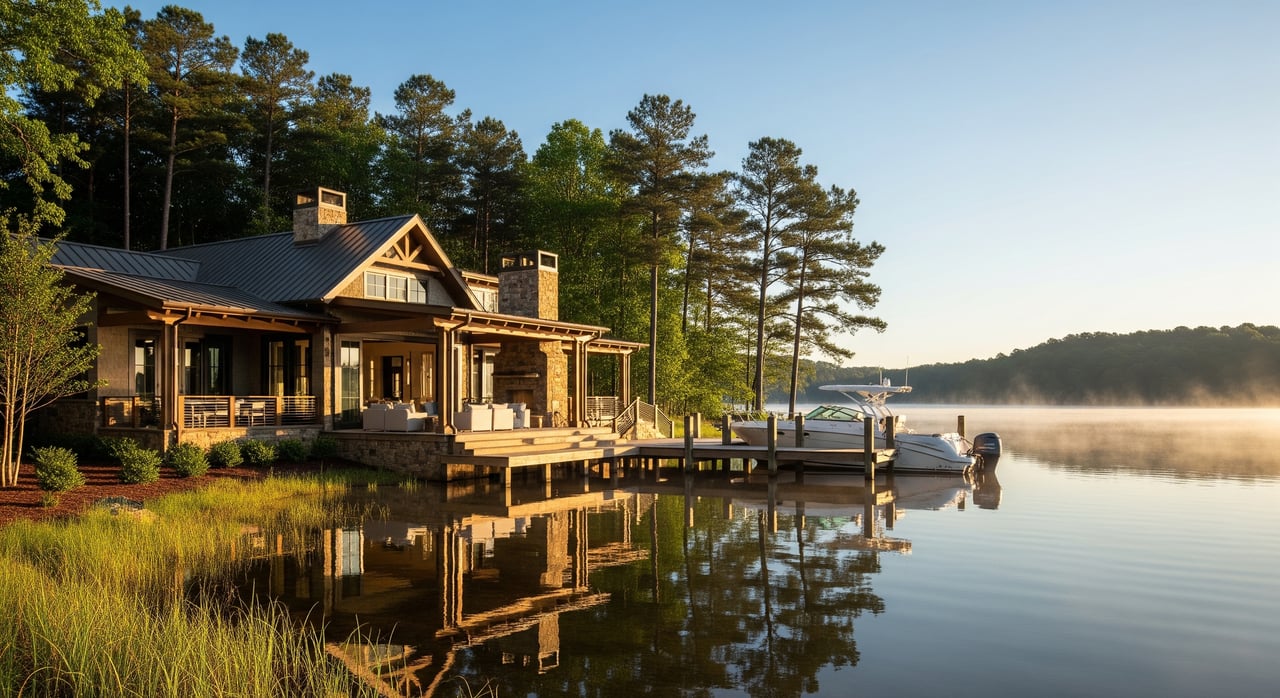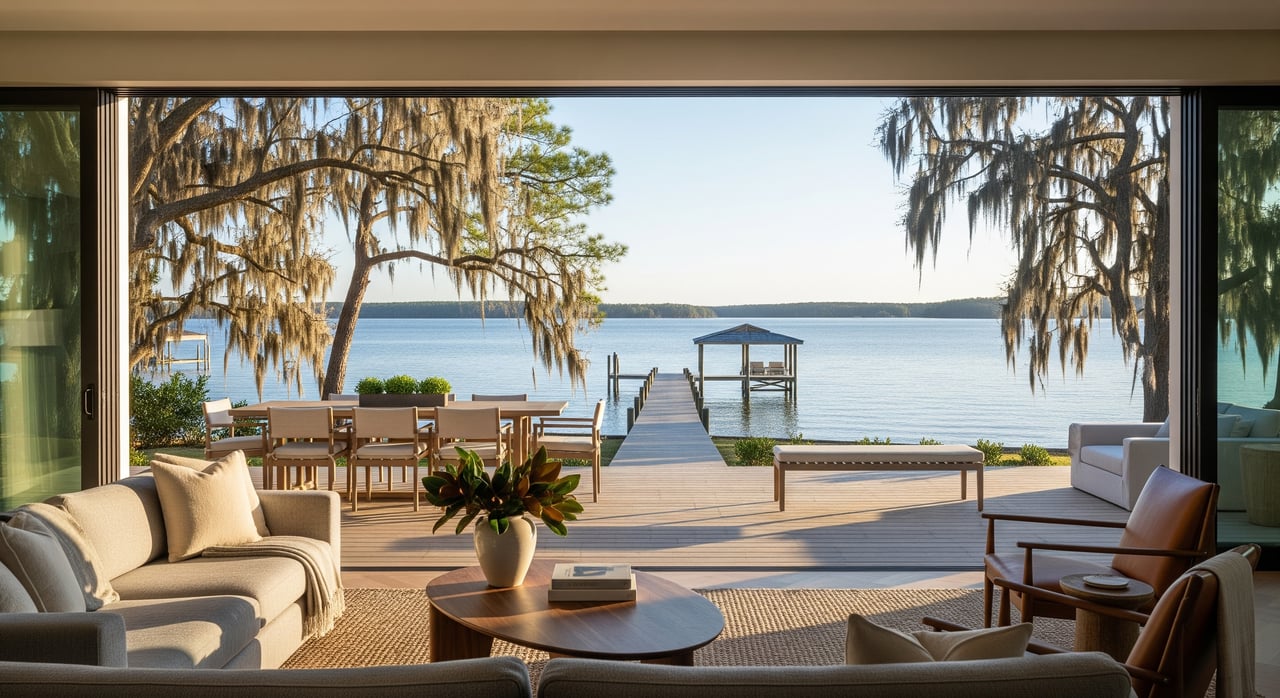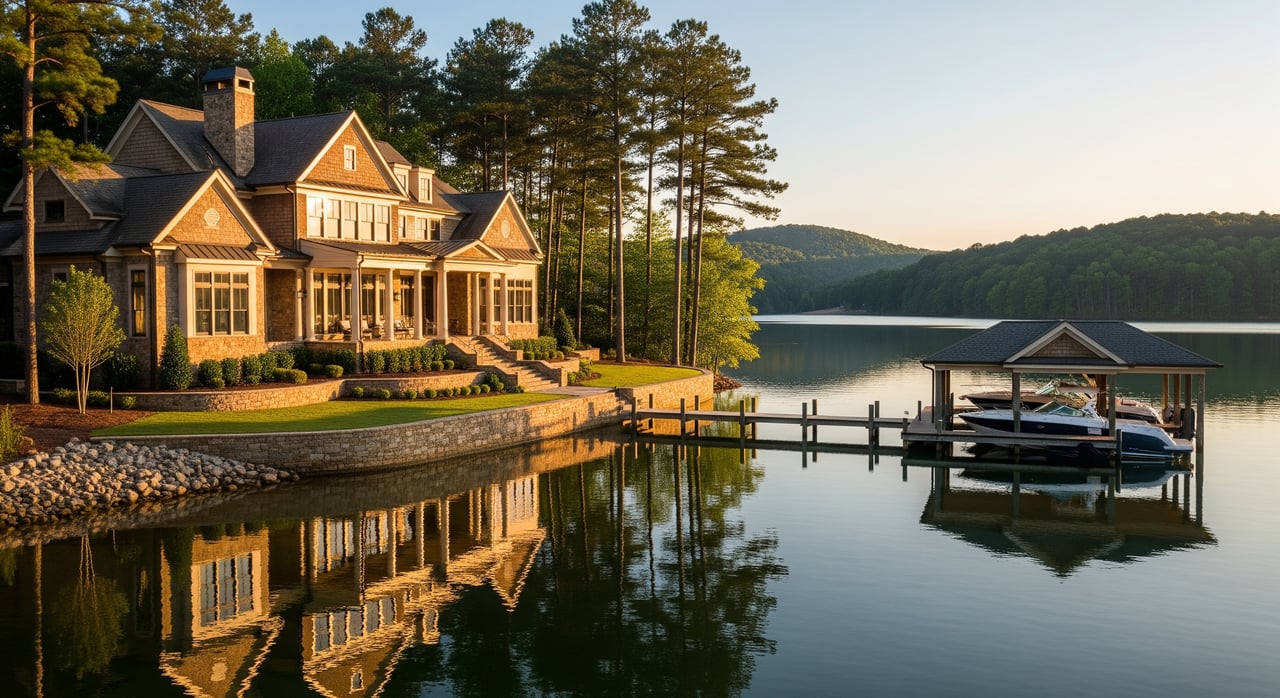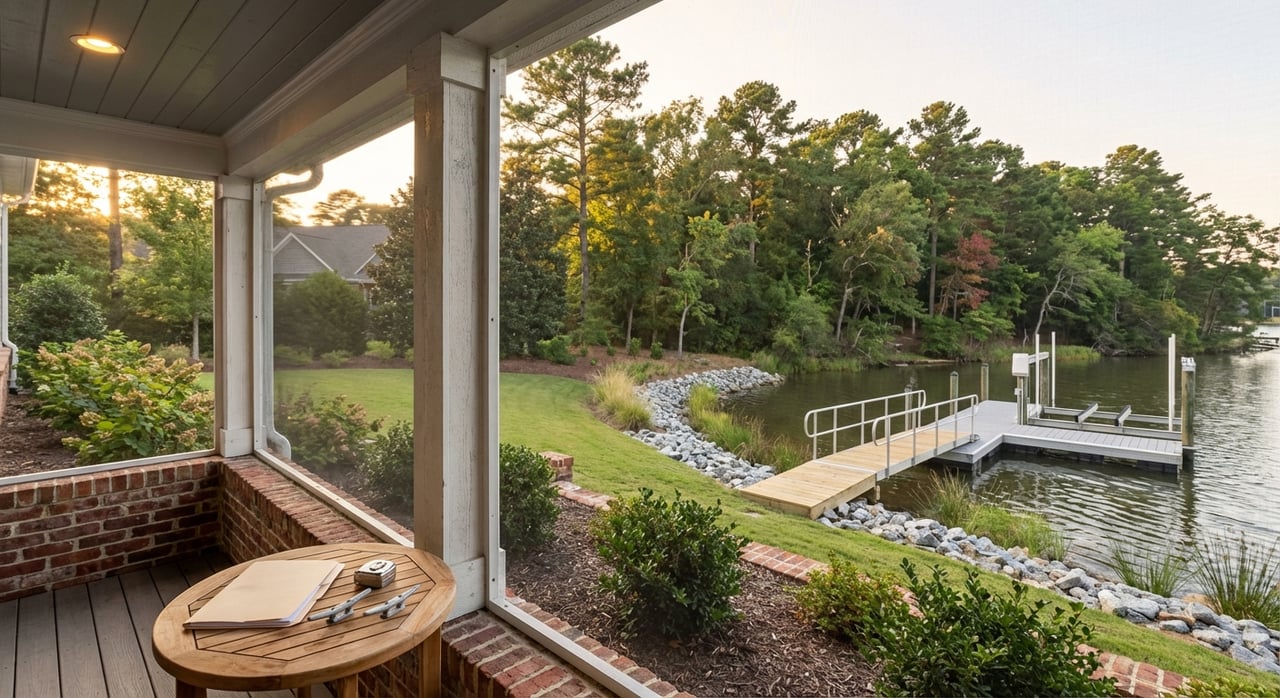
Buying a Lake Lanier home with a dock should feel exciting, not confusing. Yet one of the biggest surprises for buyers and sellers is how dock permits really work. You might wonder if a dock “comes with” the house, how long re‑issuing a permit takes, or what happens in a drought. In this guide, you’ll get a clear, practical breakdown of the U.S. Army Corps of Engineers rules that govern docks on Lake Lanier, what to check before you sign, and how to plan your timeline and budget. Let’s dive in.
Why Corps rules matter on Lake Lanier
Lake Lanier’s shoreline is managed by the U.S. Army Corps of Engineers (USACE), Mobile District. The Corps issues Shoreline Use Permits and related real‑estate licenses that authorize private floating docks and certain land-based items. These are administrative tools, not property rights. You operate under federal rules found in Title 36 CFR Part 327, which sets the baseline for public use and enforcement on Corps projects like Lanier. You can review the regulation text in 36 CFR Part 327.
The project’s playbook is the Lake Sidney Lanier Shoreline Management Plan, often called the SMP. It explains dock sizes and spacing, zoning along the shore, and how the Corps allocates a limited number of private dock permits. To understand availability and standards, start with the Lake Sidney Lanier Shoreline Management Plan (2004) and the USACE Shoreline/Permit Program page.
What a dock permit is and is not
A Shoreline Use Permit and any related license allow you to place and use a dock and certain attachments on federal property. They are typically issued for a maximum term of five years. They can be renewed if the facility is safe and compliant with standards.
A permit is not a permanent right and it does not automatically transfer with a home sale. When a deed changes hands, the prior authorization ends and the Corps requires re‑issuance to the new owner through its change‑of‑owner process. Learn what to provide in the Corps’ Change of Owner Requirements.
Permit capacity and availability
Lake Lanier has a lake‑wide cap on private docks. The SMP sets that limit at 10,615. When the cap is reached, the Corps stops accepting new private‑dock requests. This is a key reason permitted docks are scarce and closely regulated. See the cap detailed in the SMP.
When permits are limited, the Corps has used waitlists or a short application window to review remaining requests. Local reporting has even documented deadlines and drawings for permit requests. For example, see this coverage of a past application window in the Gainesville Times. Always verify the current status on the Corps’ permit program page.
Water levels can also affect new applications or operations. The Corps has previously suspended new applications during low‑water periods or while confirming remaining capacity, with public notices citing approximate lake levels as context. Past reporting on low‑water pauses is available from AccessWDUN. Because hydrology changes, check the Corps page for any active moratorium before assuming a new permit is possible.
For context, summer pool is commonly cited at 1,071 feet above mean sea level and winter pool at 1,070 feet. Drawdowns for drought or operations can change the water depth at your slip, which affects boatability. See USACE operating context in this project news release.
Step‑by‑step: new owner or new permit
Confirm eligibility and zoning
Start by confirming that your shoreline is zoned for private floating facilities in the SMP. Properties adjacent to Limited Development Areas may be eligible. The SMP shows zoning, spacing rules, and standards. Review the SMP to confirm eligibility.
Meet the ranger and open a file
Call the project office and schedule an on‑site meeting with your area ranger. First‑time applicants must meet on-site; new owners of existing facilities start the change‑of‑owner process through the Operations Manager’s office. Contact details and guidance are on the USACE Permit Program page.
Gather required documents
For a change of owner, expect to provide:
- Recorded deed with tax stamp
- Most recent recorded survey or plat
- Hand‑drawn site plan with dock dimensions
- Exhibit C electrical certification if power is present
- Entity documents if purchasing in a trust, LLC, or HOA
The Corps lists formats and instructions in its packet: Change of Owner Requirements.
Inspection and corrections
At ownership change and at renewal, the dock must be inspected by a Corps‑trained or Corps‑approved inspector. If deficiencies are found, you must correct them before re‑issuance. The Operations Manager makes the final determination after reviewing the inspector’s report. Standards, inspection cycles, and safety requirements are outlined in the SMP.
Timeline and fees
Once you submit a complete package, the Corps generally estimates about six to eight weeks for review and processing. Timing depends on workload, site complexity, and whether additional regulatory coordination is needed. See the guidance on the permit program page.
The South Atlantic Division lists an administrative fee for shoreline permits. The posted division schedule shows 835 dollars for a new permit or re‑issue for a five‑year term. Always confirm the current fee before you budget, since policies can change. See the SAD Shoreline Management fee page.
Modifications, repairs, and replacement
If you plan to modify, move, or replace a permitted dock, get written approval from your area ranger before you start. Replacements are generally considered during the current permit term and must meet size, spacing, and environmental rules. Some older features, such as enclosed boathouses, are not authorized for new construction. They may remain only if they are grandfathered and kept compliant. Refer to facility standards and grandfathering rules in the SMP.
Buyer due diligence checklist
Before you write an offer on a Lake Lanier property with a dock, verify the following:
- Ask for the Corps Shoreline Use Permit number and a copy of the permit or license, plus any amendments. Confirm the expiration date. See the Corps’ change‑of‑owner packet.
- Request the most recent Corps inspection report and any corrective‑action receipts. If none exist, expect an inspection to be required at ownership change. Standards are in the SMP.
- Verify Exhibit C if the dock has electrical service. See the Exhibit C requirement in the change‑of‑owner packet.
- Review a recorded boundary survey showing the federal project line, flowage easement, and the lot’s legal description. The Corps relies on recorded deeds and plats. Requirements are in the change‑of‑owner packet.
- Confirm any county or city permits for land‑side work like septic or electrical. Local rules still apply alongside federal policy, as noted in the SMP.
- Budget for administrative fees, inspection costs, and possible repairs to meet current standards. Fee guidance is on the SAD page.
- Treat an unpermitted dock as a serious red flag. Unauthorized structures can trigger enforcement and removal. See the Corps’ permit program overview.
Seller prep checklist
- Gather your current permit or license, inspection certificates, Exhibit C if applicable, and any Corps correspondence about violations or modifications.
- Disclose in writing that the buyer must complete the Corps change‑of‑owner process and provide the required documents. Share the Corps’ change‑of‑owner packet.
- Keep receipts and contractor documentation for recent repair or upgrade work to speed the buyer’s inspection and re‑issuance.
Costs, safety, and red flags
Permitted facilities must be kept in a safe, usable condition. Expect to budget for periodic inspections and maintenance, including electrical work that meets current codes and Corps standards. Safety and maintenance expectations are outlined in the SMP.
Abandoned or derelict docks are a community concern on Lanier. If you inherit a failing structure, local resources explain proper disposal options. The Lake Lanier Association provides guidance on disposing of abandoned docks.
Unauthorized construction on Corps property can lead to enforcement actions under federal rules. That can include administrative penalties, revocation of permits, and orders to remove or restore. Review the Corps’ program overview and governing rules on the permit program page and 36 CFR Part 327.
Alternatives if a private dock is not possible
- Community or neighborhood docks. These can offer deeded or assigned slips and are counted in the SMP using a slip‑to‑permit conversion. See accounting details in the SMP.
- Marina slips or boat storage. Commercial marinas offer seasonal or annual leases. A private dock permit is not needed for a marina slip.
Local guidance you can trust
Buying or selling on Lake Lanier works best when you pair the lake lifestyle with clear, timely permit knowledge. If you want a smooth closing, start early on document gathering, schedule your ranger meeting, and build in time for inspections and any repairs. When you are ready for hands‑on help that understands both the rules and the lifestyle, connect with Jennifer Anderson for a conversation about your goals.
FAQs
Do dock permits transfer with a Lake Lanier home purchase?
- No. Corps permits are not property rights and do not automatically transfer. The new owner must complete the Corps re‑issuance process using the change‑of‑owner packet.
How long does re‑issuing a Lanier dock permit take?
- The Corps generally estimates about six to eight weeks after receiving a complete package, subject to workload and site complexity. See the permit program guidance.
How much are Corps dock permit fees on Lake Lanier?
- The South Atlantic Division lists an administrative fee of 835 dollars for a new permit or re‑issue for a five‑year term. Confirm the current amount on the SAD fee page.
What happens to permits during drought or low water?
- The Corps has previously paused new applications during low‑water conditions or while verifying capacity. Check for active moratoria and lake level updates, and see past reporting from AccessWDUN.
Can I expand, move, or replace my dock on Lanier?
- Not without Corps approval. Modifications and replacements must meet current size, spacing, and environmental rules, with some older features allowed only if grandfathered. Review standards in the SMP.
What if a listing’s dock has no paperwork?
- Treat it as a major red flag. Unauthorized structures can trigger enforcement and removal. Start by reviewing the Corps’ permit program overview.